The ZKM Prompting Portal at kulturBdigital
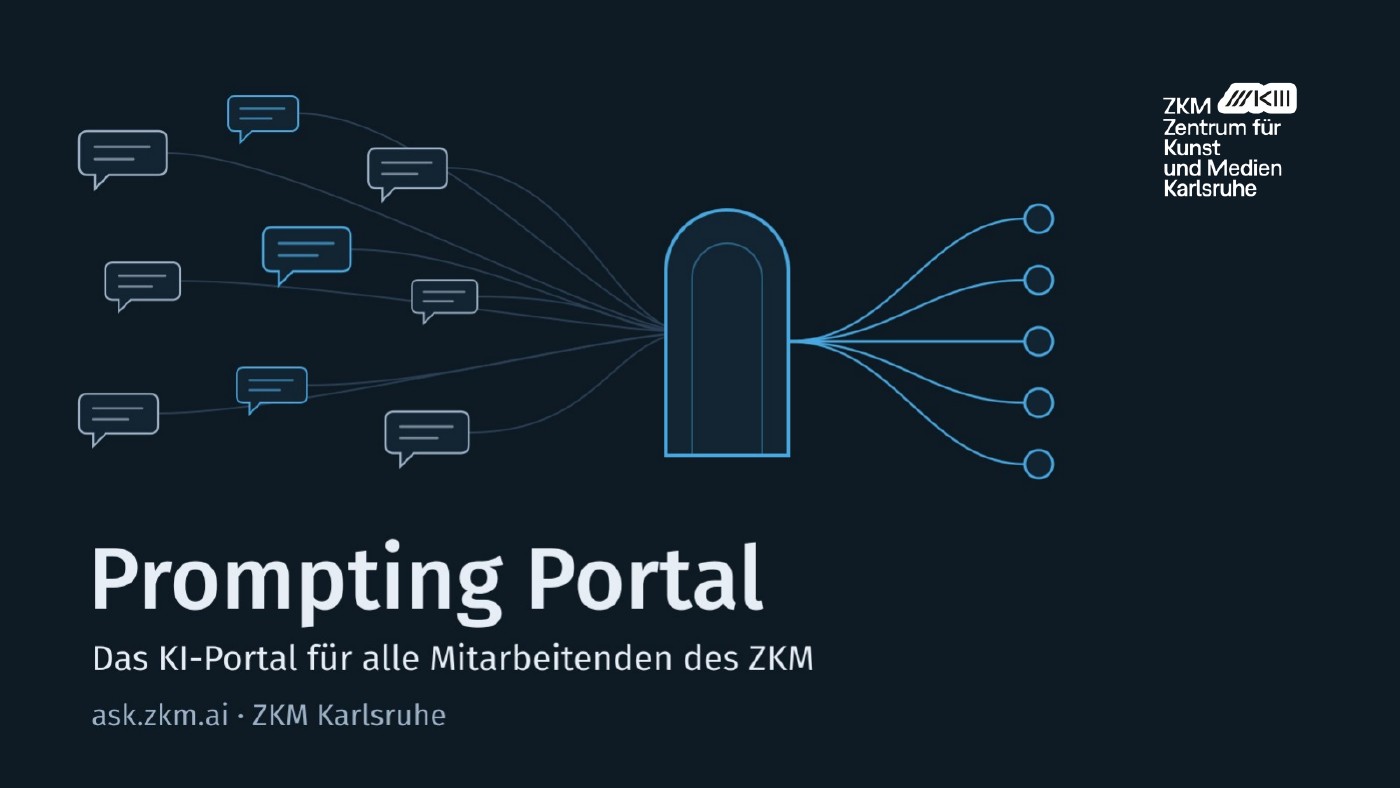
At the kulturBdigital conference in Berlin, I presented the technical side of ZKM’s prompting portal, ask.zkm.ai. The conference took place at ufaFabrik on 15 October. My session went through how we built the system and included a live demo.
The starting problem was practical. People were using separate AI accounts, and the institution had little control over where its information went. Useful prompts were kept in individual chats. We needed a shared system that we could operate and understand.
One place to manage the providers
We started with our own chat interface, Open WebUI. At first, provider keys were connected directly to it. Changes to a model or provider then had to be repeated in other systems using the same service.
We moved those connections into a central LiteLLM gateway. The chat interface asks the gateway for a model, and the gateway handles the provider connection. That gives us one place to manage access and see what requests cost.
For staff, the interface offers task tiles. A tile can point to an alias, with the model selected behind it. I can change that model without asking everyone to rebuild their workflow. The demo included changing the model behind a tile.
Giving the system access to sources
The portal also connects to institutional knowledge through MCP servers. A library search can query the catalogue. Other tools can retrieve information from the website or a wiki. The original systems remain the sources.
This needs checking in daily use. A model can have a search tool available and still answer without calling it. In the talk I covered failures we had encountered, including invented biographies and a web search that had stopped working.
Training is part of operating the portal too. The AI driving licence gives people different levels of access as they learn to use the system and build tools for colleagues.
The public slides are available. We published the architecture as the ask-zkm-ai-blueprint, with Docker Compose examples and notes on adapting it. You still need to connect your institution’s login and data sources.