Rebuilding the Begegnungshof website
I’ve been looking after Im Steinig’s websites and technical infrastructure for over ten years. I enjoy working with the team.
When the Begegnungshof website was showing its age, Julia and I decided to rebuild it. The Begegnungshof is a farm in Karlsbad with educational activities involving animals. Julia Kretz chairs Mensch-Tier-Begegnung Karlsbad e.V., the association that runs it. She brought the content and the requirements from everyday life at the farm; I handled the technical work. The farm already had a website presenting its activities and events. We wanted the new version to reflect its new visual identity and support the way the farm works.
I used to build websites by hand. This time I used AI for almost all of our custom changes. Between an idea and the code, there was now a conversation. I described what should happen, had it implemented and looked at the result. Some apparently small requests turned out to involve several parts of the website.
The foundation was WordPress again. It holds the pages, text, images and user accounts. Julia can edit the content there without touching code for every change. To build the pages, we used Avada: a theme with a visual editor for arranging images, headings and other elements into pages.
For events, we added Events Manager and its Pro extension. It manages dates, tickets and bookings, including attendee forms and payment processing. A workshop is more than a piece of text on a page: it has a date, available places and bookings attached to it.
That gave us a lot to work with. But the pieces together did not yet look like our website, and they did not always behave the way we needed them to for the farm.
There was already a visual identity guide from GRETEL Design & Motion, with colours, fonts and animal illustrations. Our first Avada draft still contained English advertising copy for software. While Julia worked on the farm’s content, I had the design adapted. The remnants of the template gradually disappeared between the pony school and holiday activities.
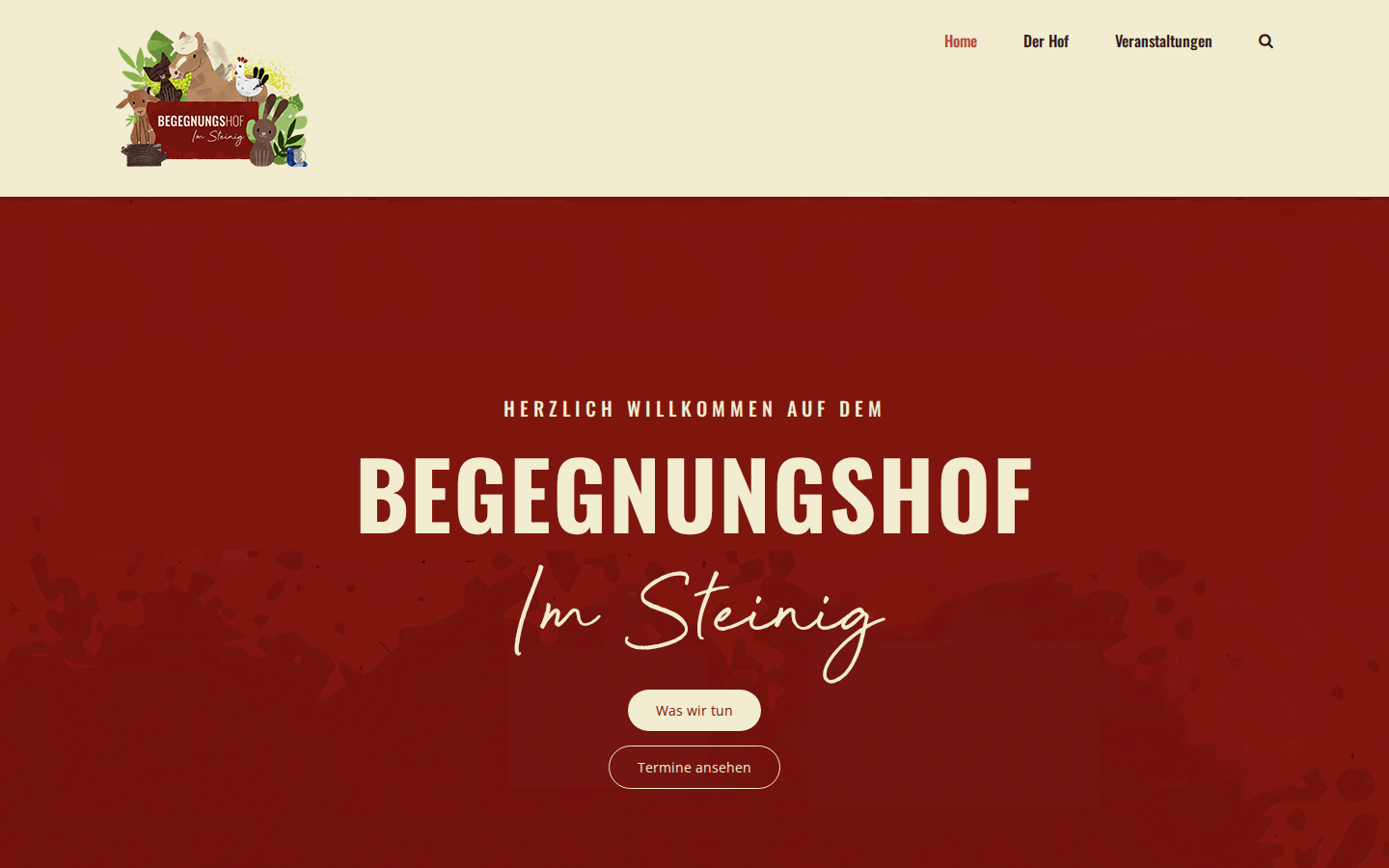
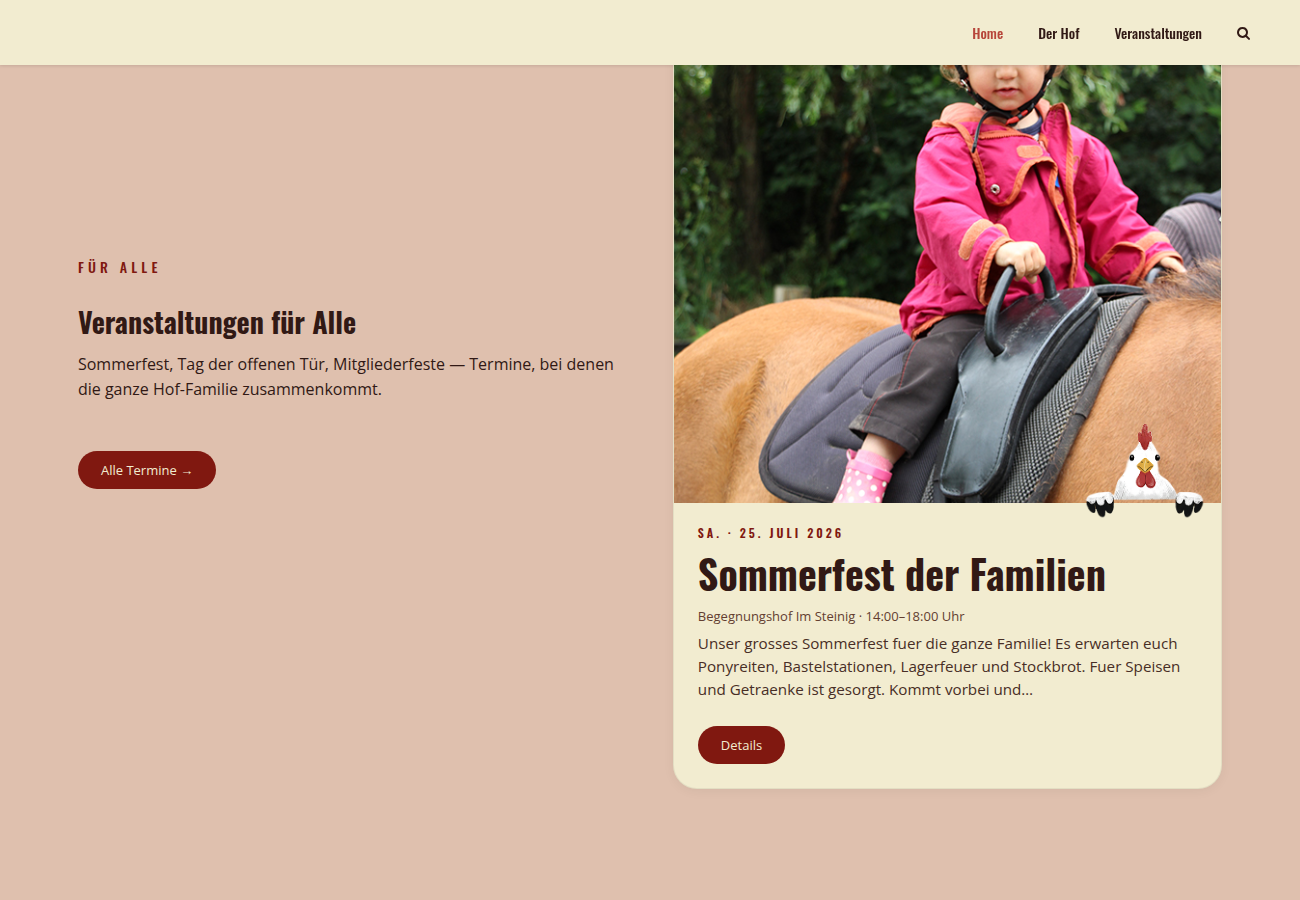
The event listings were where the design had to connect to the data. Each event needed to appear in the overview with an image, its title and its date. Clicking that preview should lead to the event page with the details and booking form. The event system already held this information. We needed our own presentation of it within our pages. Otherwise, we would have had to enter the same dates by hand in the overview as well.
This was where our own code began to take shape. With AI, I built the connections between the existing functions and what we wanted on the page. The initially scattered changes became a dedicated WordPress plugin for the farm: BHiSt. It brought together our event layouts, additions to membership access and custom booking functions.
When someone sees an event on the homepage, these parts are already working together: WordPress supplies the content, Avada provides the surrounding page, and our plugin presents the event data as a clickable preview. Following the link takes the visitor into the booking flow managed by Events Manager. For the person using the site, it needs to feel like one continuous process.
The illustrated animals were part of those event previews too. They were supposed to peek over the edge of the image. The hen was too high; the goat and rabbit were already too low. I described the changes to the AI and checked the next version. Each illustration added more rules for sizes and spacing.
Julia eventually prepared new images, all with the same height and the same line for peeking over the edge. We could then align them together. A problem we had kept working on in code became simpler once the source images were prepared to fit. That was how Julia’s work and mine connected.
The same applied to editing the site. We wanted a longer passage of text to expand when someone clicked “Read more”. Our first solution worked, but it required a small code snippet in the page content. Julia needed to be able to use it like the other elements in the editor. So we connected our plugin to Avada. The expandable text became its own element, ready to insert and edit.
AI also helped build the tools Julia could then use herself. We had to be precise about where a function belonged: on the visible page, in the editor, or in the booking process.
For members-only activities, for example, changing the wording on a button was not enough. Access had to connect to the user account and the booking rules. Our plugin added membership checks and sign-in prompts. Events Manager remained responsible for the booking itself. Our extension had to work within that process.
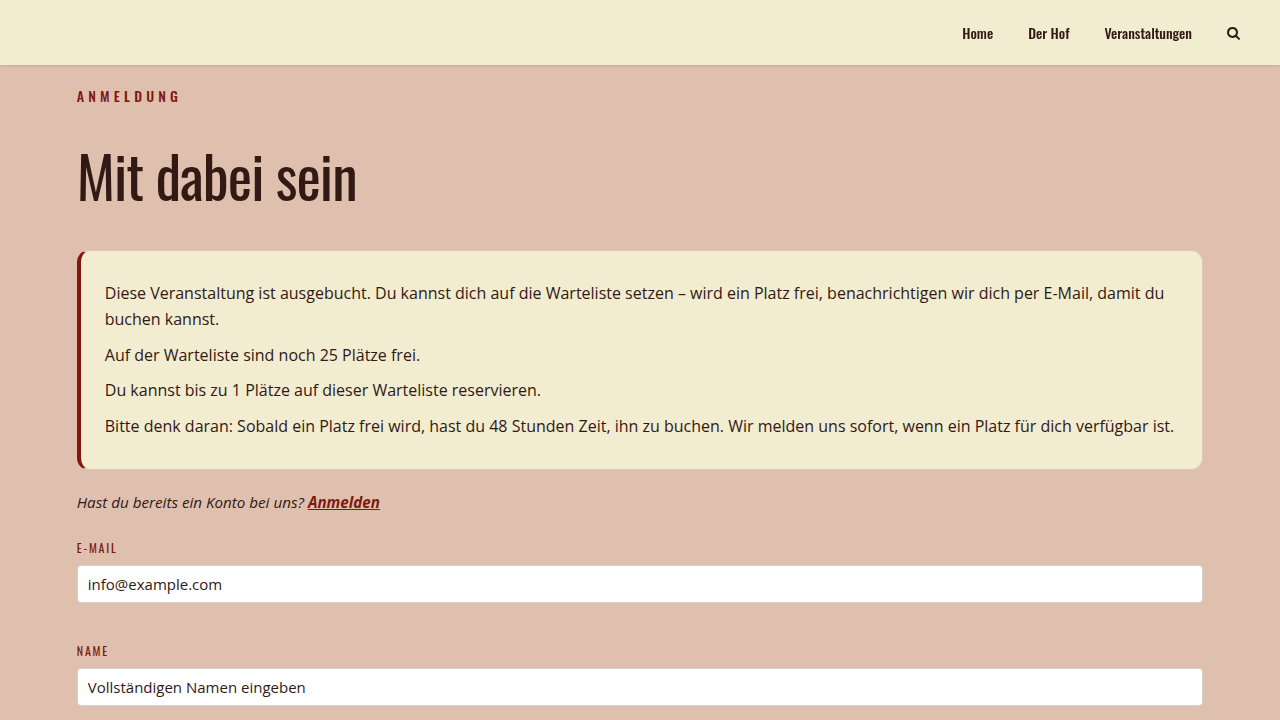
The waiting list showed how easily something could be missed. We had added a price preview so people could see the cost even when registration was closed. In that case, our layout replaced the booking form with the ticket prices.
Later, Julia reported that the waiting list was missing from a fully booked event. It was enabled in the event system. Our own layout was hiding it: a full event also counted as unavailable for booking, so the price preview appeared. But the waiting list was part of the form we had just hidden.
Understanding the fault meant looking at both parts. Our extension did what we had asked it to do. The event plugin provided the waiting list too. It was their interaction that made the waiting list disappear for visitors. We had to make our rule more precise and test the whole process again.
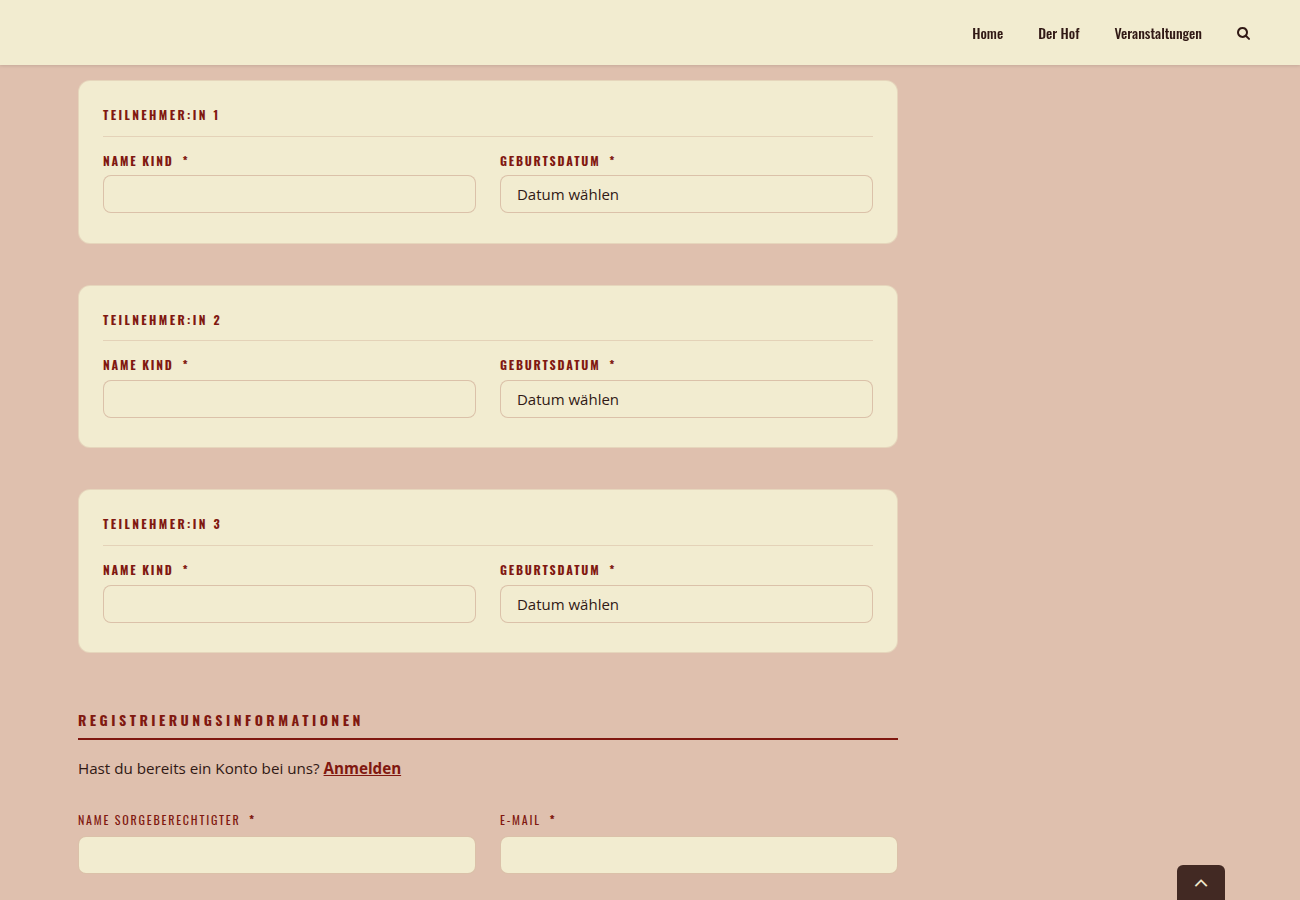
That became a substantial part of working with AI on this site. A requested change could turn into code quickly. Whether it fitted the rest became clear when we used it: editing a page, registering more than one child, or opening an event with no places left. I had to describe those cases, inspect the result and keep asking when something did not fit.
The new website grew out of existing software, Julia’s content and design work, and our own extensions. WordPress, Avada and Events Manager provided the foundations. With AI, we could work on the places where those foundations did not yet fit together for the farm.
Eventually, the new site replaced the old one. Julia had a system in which she could keep maintaining pages and events. For me, the way I build such systems had changed: less code written by hand, more work describing the connections and checking the result. Even a hen peeking over the edge of an event image was part of that. Behind it were event data, a custom layout and an editor that allowed the site to keep growing.